Introduction
For example, when you search for “Best digital marketing courses,” Google displays a list of websites related to your search. But have you ever thought about how Google finds those websites and decides which one should appear first?
This is where SEO comes into the picture.
SEO stands for Search Engine Optimization. It is the process of improving a website so that search engines like Google can understand its content and show it to people searching for relevant information.
In simple words, SEO helps your website reach the right audience through organic search results. It does not require you to pay Google for every visitor who clicks on your website.
But SEO is not just about adding keywords to a webpage. Search engines need to discover your website, understand its content, and decide whether it is useful for a particular search.
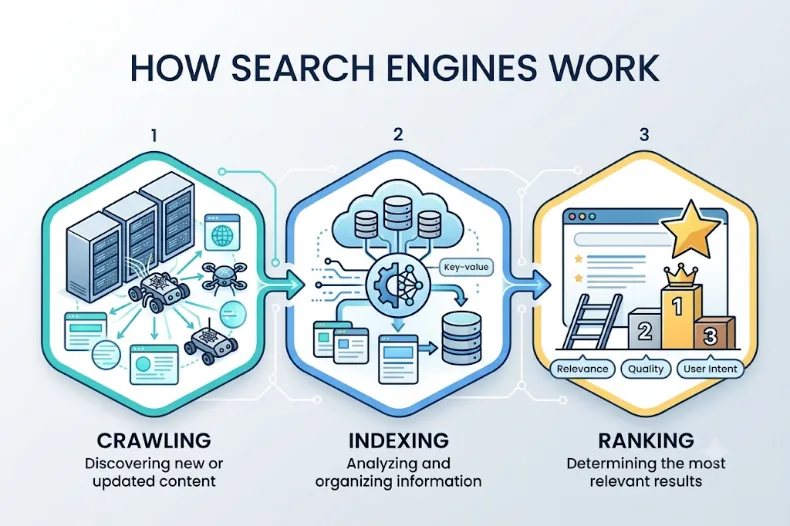
To understand this better, we first need to learn about three important stages of how Google Search works:
- Crawling
- Indexing
- Ranking
Let's look at each one with simple examples.
1. Crawling – How Google Discovers Your Website
Imagine you have created a new website and published your first blog post. You want people to find your article through Google. But how does Google know that your webpage exists?
This is where crawling happens.
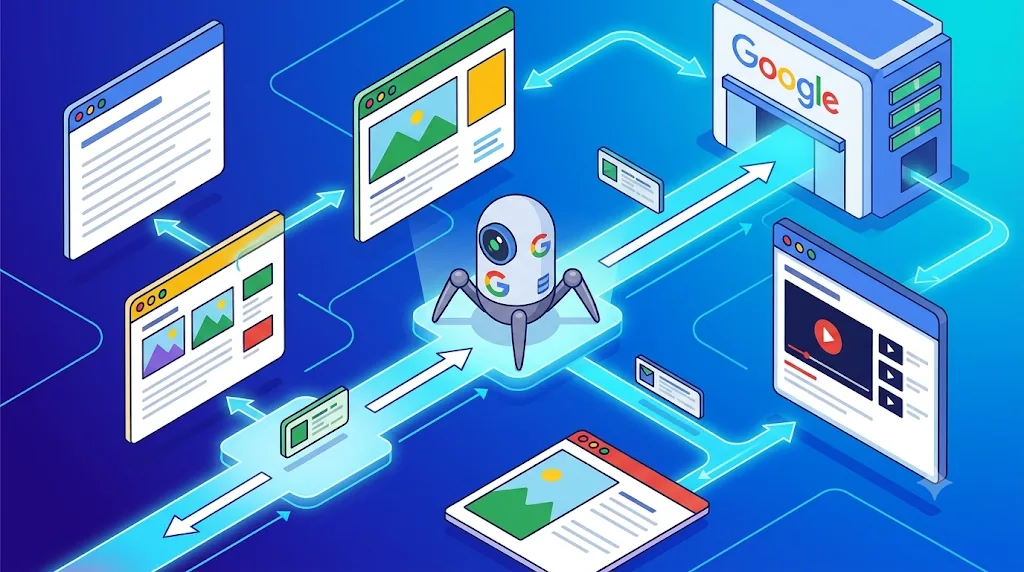
Crawling is the process through which search engines discover webpages across the internet. They use automated programs called crawlers or bots to find and visit webpages.
Google uses a crawler called Googlebot.
Think of Googlebot as a visitor who explores webpages by following links from one page to another. It can also discover webpages through XML sitemaps and other methods.
When Googlebot visits a webpage, it fetches the page and its accessible resources, such as:
- Text content
- Images
- Videos
- Internal links
- External links
- HTML and other webpage resources
Google then processes the information to understand what the webpage is about.
For example, imagine you publish a blog titled “What Is Digital Marketing?” on your website.
Googlebot may discover this page through your sitemap or a link from another webpage. It then visits the page and fetches its content.
This is known as crawling.
One important thing to remember is that Google does not visit every webpage immediately. Sometimes it may take time for Google to discover and crawl a newly published page.
Similarly, when you update an existing article, Google may revisit the page to discover the changes.
So, crawling is simply the first step that helps Google discover the content available on your website.
2. Indexing – How Google Stores Your Website Information
Now imagine Googlebot has visited your webpage and collected its information. What happens next?
The next stage is indexing.
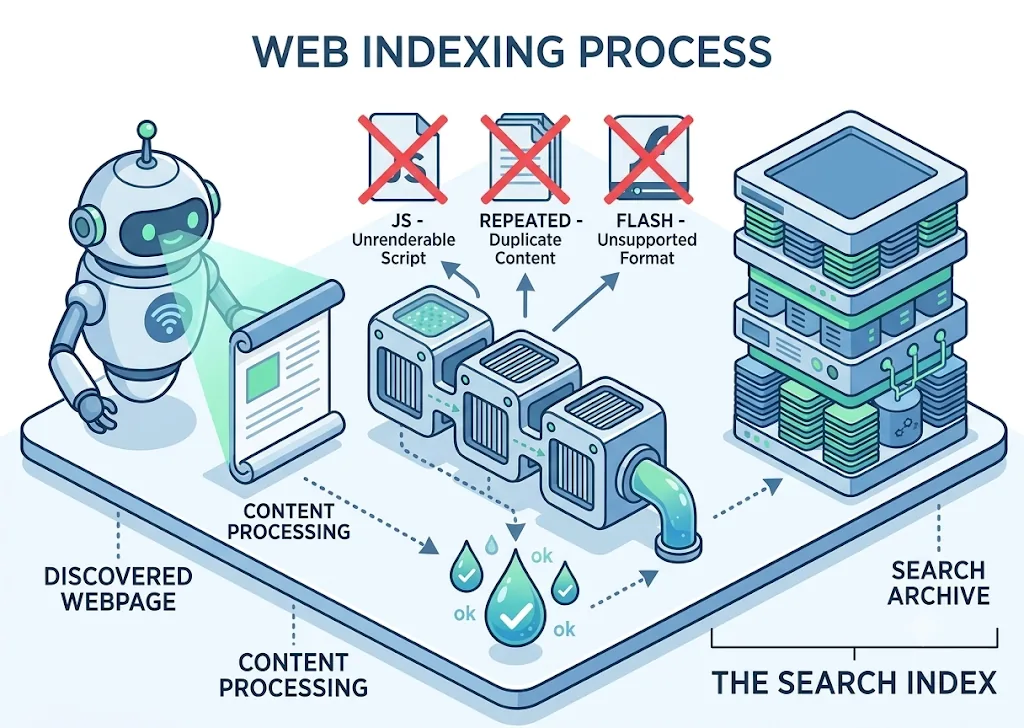
Indexing is the process in which Google processes the information collected from webpages and may store it in its search index.
Think of Google's search index as a huge library. Every webpage that Google processes and includes in its index becomes part of this library.
When someone searches for information, Google looks through its index to find relevant webpages.
During indexing, Google tries to understand different parts of your webpage, such as:
- The main content of the page
- Page titles and headings
- Images and their descriptions
- Links and page structure
- Other relevant information
Google can also process and index different types of files, not just ordinary HTML webpages. Here are some examples of file formats Google supports:
| File category | Examples |
|---|---|
| Web documents | HTML, XHTML |
| Text documents | TXT, CSV |
| PDF documents | |
| Microsoft Office files | DOC, DOCX, PPT, PPTX, XLS, XLSX |
| Image formats | JPEG, PNG, GIF, WebP, SVG |
However, just because Google supports a particular file format does not mean every file will automatically be indexed. Google must be able to access and process the content, and the page must meet its indexing requirements.
Let's understand this with a simple example.
Suppose Googlebot crawls your article about digital marketing. Google processes the content and determines whether it should be included in its search index.
If the page is successfully indexed, it becomes eligible to appear in relevant Google search results.
One important point: crawling and indexing are not the same. A webpage can be crawled by Google without being included in its index.
This is why publishing an article does not guarantee that it will immediately appear in Google search results.
3. Ranking – How Google Decides Which Website Appears First
Now comes the stage that every website owner wants to understand: ranking.
Imagine someone searches for “Best SEO tools for beginners” on Google.
Google searches its index and finds many webpages related to this topic. But it cannot display every webpage in the same position.
So, how does Google decide which webpage should appear first?
This is where ranking comes in.
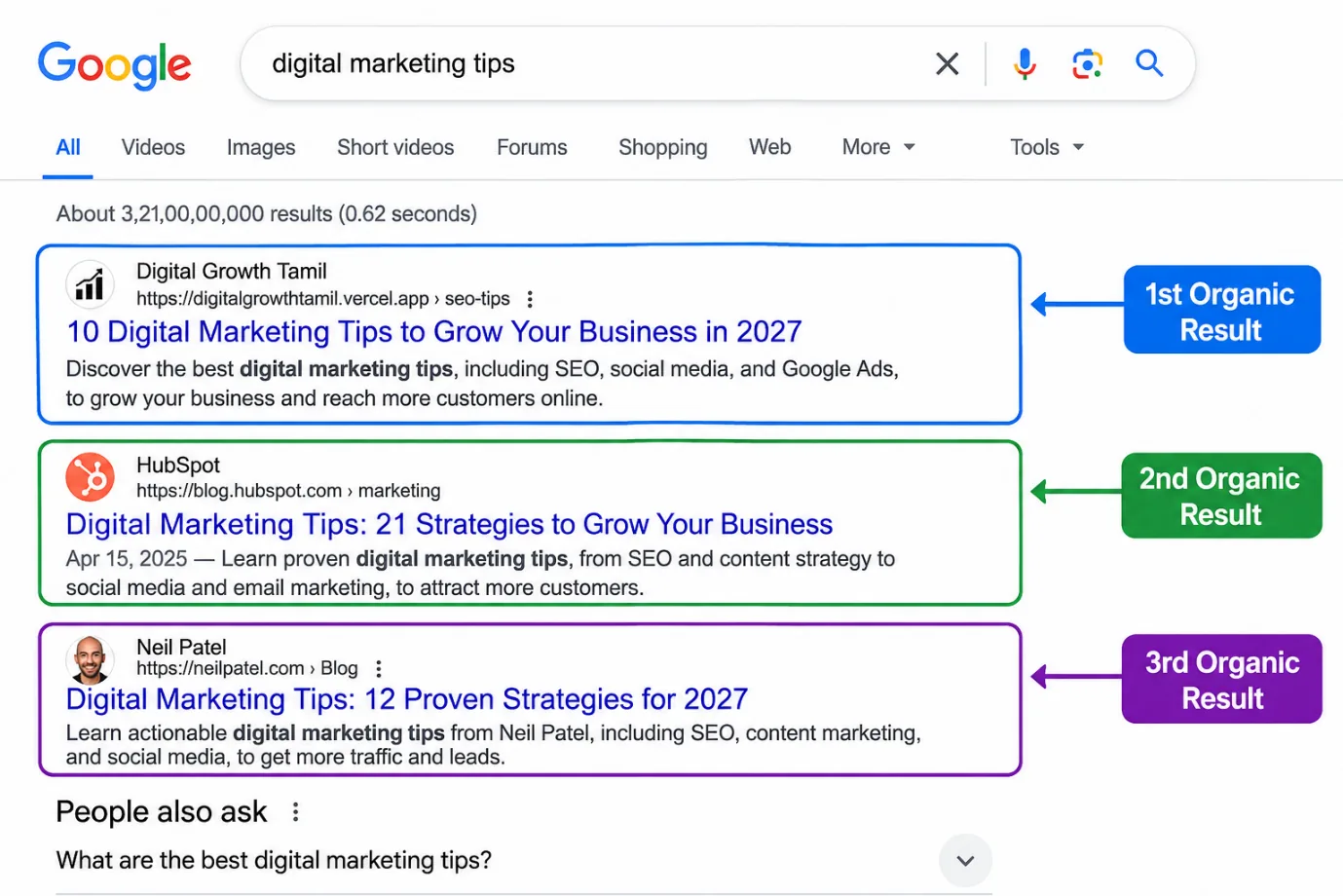
Ranking is the process of determining the order in which relevant webpages appear in search results for a particular search query.
Google uses many automated ranking systems and signals to identify content that is relevant and useful to users.
Some important considerations include:
- Content relevance: Does the webpage answer what the user is searching for?
- Content quality: Does the article provide useful and reliable information?
- User experience: Is the webpage easy to navigate and read?
- Mobile usability: Does the website work properly on mobile devices?
- Page experience: Does the page provide a good overall browsing experience?
- Links: Are there relevant links and references that help establish the page's usefulness and credibility?
For example, imagine you have written an article about “Best SEO Tools for Beginners.”
Another website has also published an article on the same topic.
Google evaluates both webpages and many other relevant results to determine which pages best serve the user's search.
If your article provides helpful information, answers the search query, and offers a good user experience, it may have an opportunity to appear higher in the search results.
However, ranking is not guaranteed. Even well-optimized websites need time and continuous improvement to build their search visibility.
The position at which your webpage appears in Google's search results is known as its ranking.
Conclusion
Now you have a basic understanding of how Google discovers and displays webpages in its search results.
Crawling, indexing, and ranking are three important stages that help us understand how search engines work.
Let's quickly recap what we have learned:
- Crawling: Google discovers your webpages using automated crawlers like Googlebot.
- Indexing: Google processes webpage information and may store it in its search index.
- Ranking: Google determines the order of relevant webpages based on many ranking signals.
Understanding these three stages is a good starting point for anyone who wants to learn SEO.
If you are planning to grow a website or start a blog, learning these fundamentals will help you understand what happens behind the scenes when someone searches on Google.
SEO is a continuous learning process. The more you understand how search engines work, the better you can improve your website and reach the right audience.
Keep learning, keep optimizing, and keep growing!
Stay connected with Digital Growth Tamil for more digital marketing and SEO tutorials.